
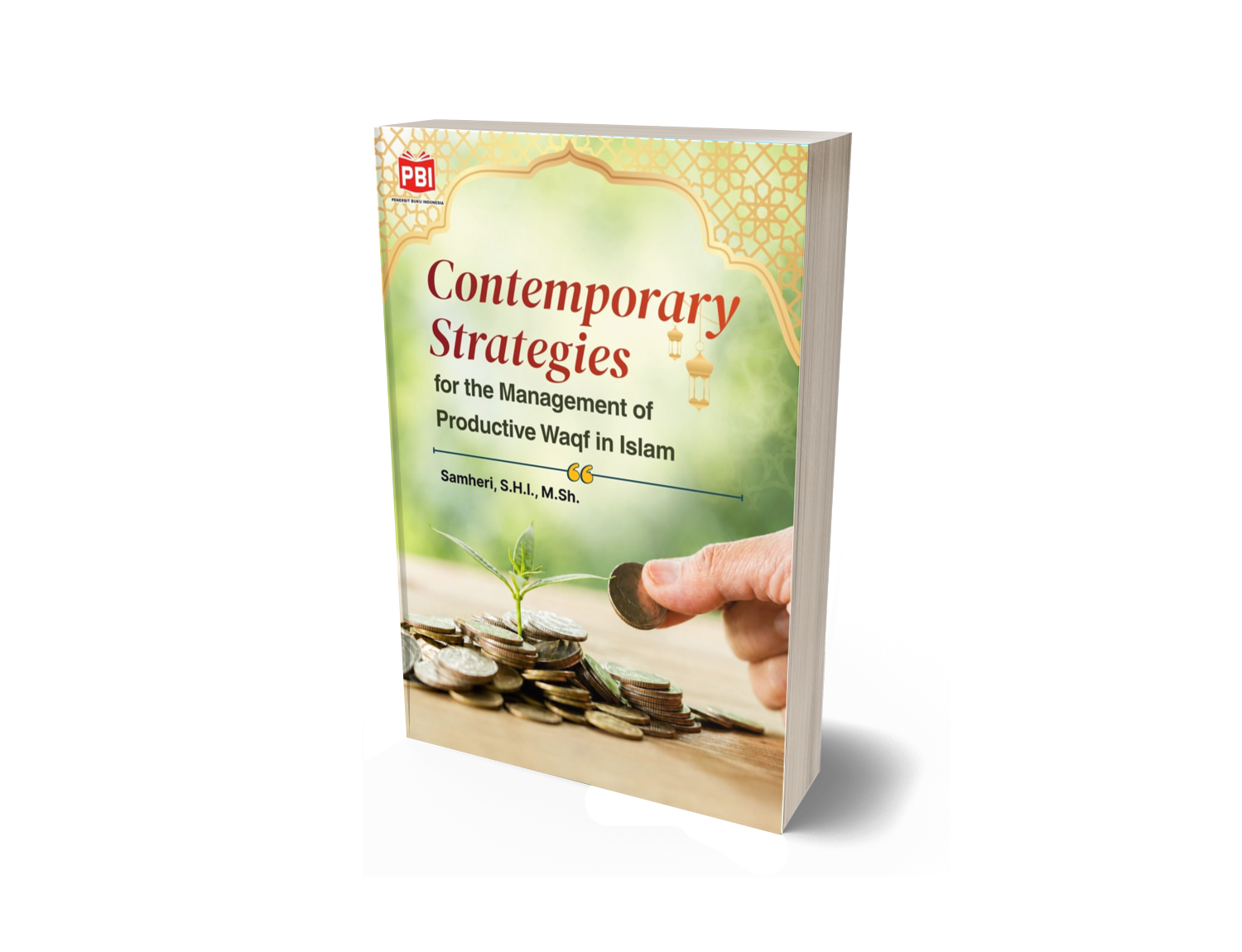
Waqf is one of the most promising instruments in the Islamic economic system for promoting the welfare of the Muslim community. This book discusses the management of waqf in the contemporary era. The author emphasizes the importance of professional and innovative management to ensure that the benefits of waqf continue to flow widely as a form of ongoing charity (ṣadaqah jāriyah).
The opening section of this book explains the fundamental concepts of waqf along with its various categories. The author also discusses the legal principles, objectives, and benefits of waqf from the perspective of Islamic teachings. Furthermore, the book examines waqf administration and the role of the nāẓir (waqf manager). Various mechanisms for the development of productive waqf, including the concept of istibdāl, are presented as practical solutions.
The following section presents case studies on the contemporary management of productive waqf. Readers are invited to explore practical strategies implemented in real situations. Various supporting and inhibiting factors are also explained, providing valuable insights for readers.
This book is expected to serve as a beneficial reference for waqf managers (nāẓir). Academics, students, and policymakers may also gain valuable lessons from it. It is hoped that this book will encourage a transformation in the mindset toward waqf management, shifting it from a static approach to one that is more productive and capable of generating broader benefits for the Muslim community.
| Detail Buku | |
| ISBN | |
| Penulis Buku | Samheri, S.H.I., M.Sh. |
| Editor | Weni Yuliani, S.Si., M.M., C.Ed |
| Penyunting | Aulia Septia Pitri, S.T. |
| Desain Sampul & Tata Letak | Bunga Elza Ulandari, S. Psi |
| Penerbit | CV. PENERBIT BUKU INDONESIA |
| Kategori | Ekonomi Islam |
| Ukuran | A5 |
| Tahun Terbit | 2026 |



Ulasan
Belum ada ulasan.